Personalized search and find book
Your search and find book, with your loved ones in your own places.
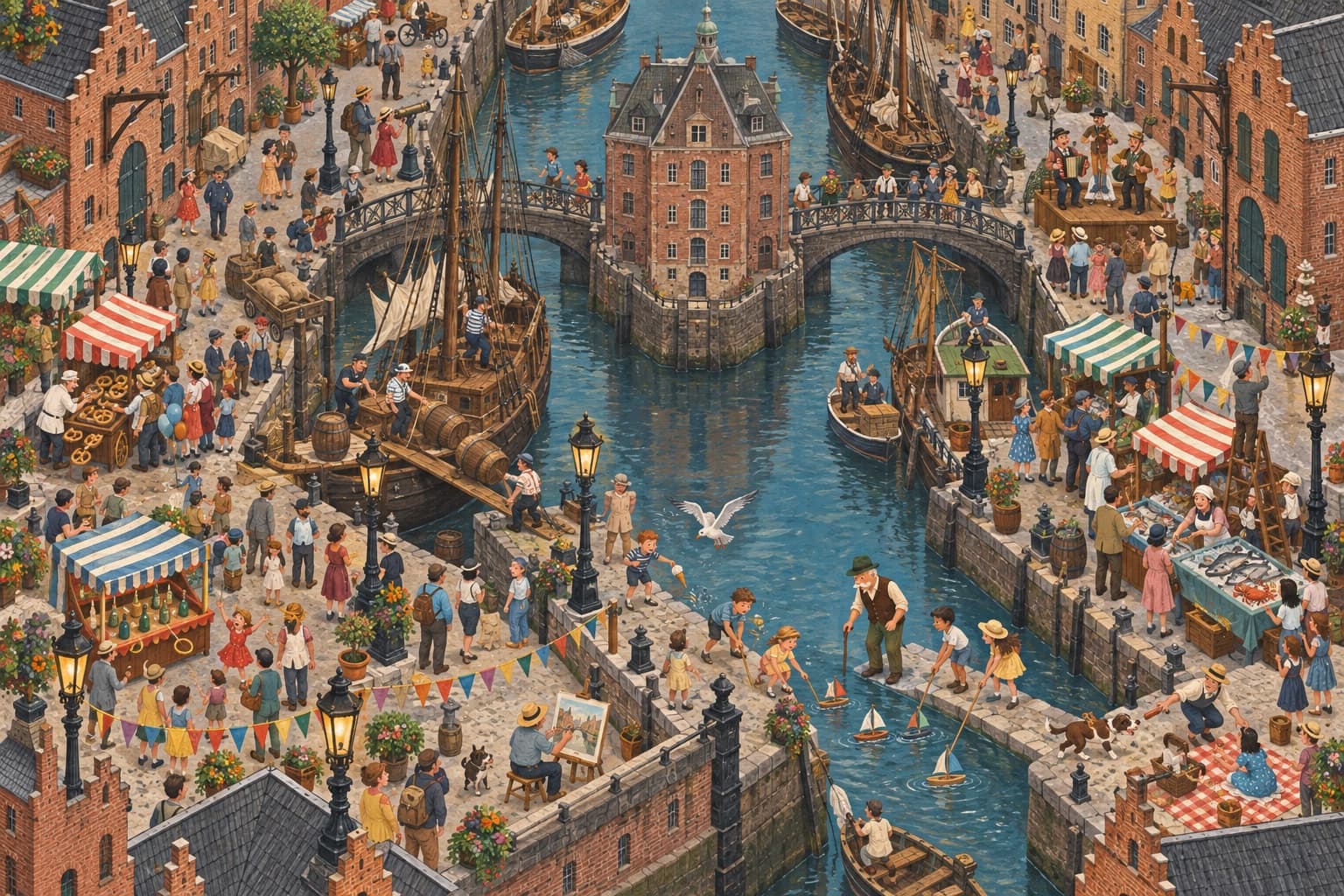
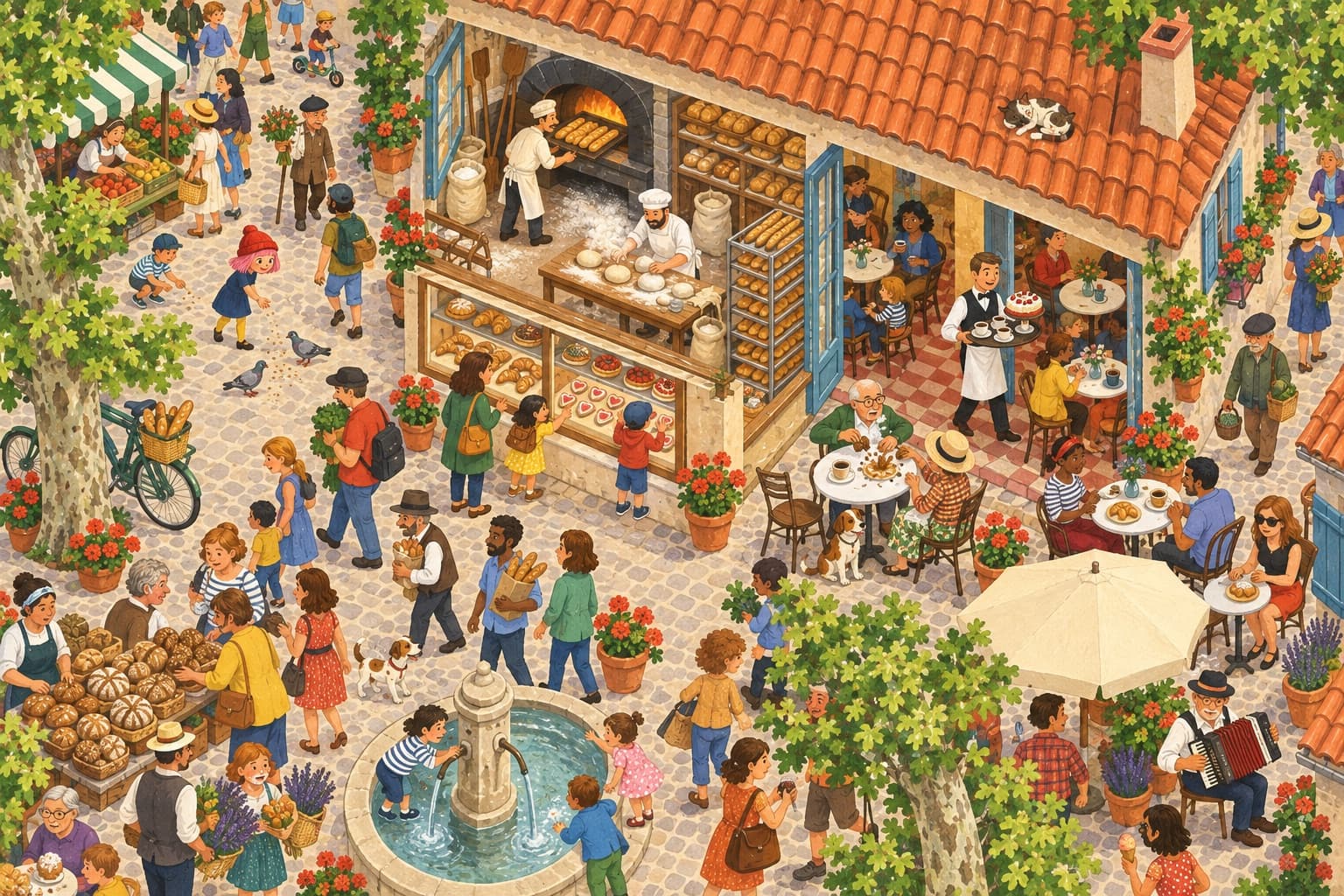
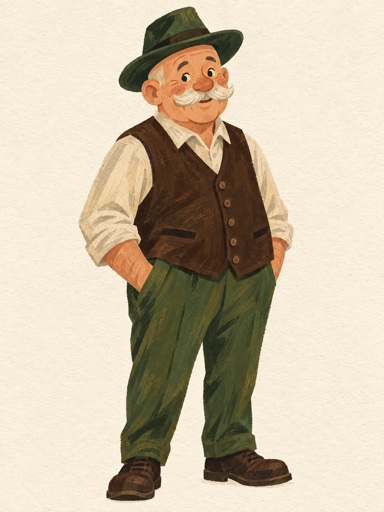
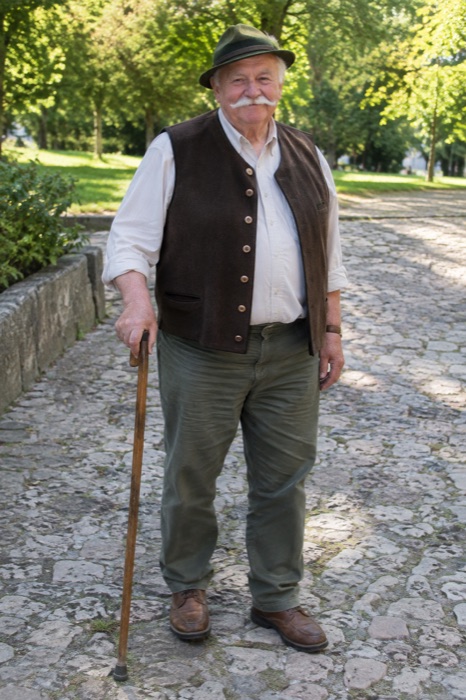 Grandpa Karl hidden in the picture
Sample photo
- Your charactersThe child, Grandpa, an aunt, the dog. Described, or drawn from a photo.
- Your placesThe vacation spot, the town square around the corner, Grandma's garden. Describe them or upload a photo.
- As a search and find bookBig double pages full of life, and on every one somebody from your family is hiding.
How your search and find book is made
- 1
Add your characters
Up to 6 characters: the child, siblings, grandparents, friends, the pet or a made-up creature. Described, or drawn from a photo.
- 2
Choose the places
14 double pages, each one a place. Give us a theme, such as “Summer by the sea”, and we'll suggest places to match. You describe your own places in a few words, with a photo if you like.
- 3
Pick a style
From the classic busy picture to colored pencil and gouache. One style carries the whole book.
- 4
See the preview
We paint your characters, the cover and the first double page for free, straight away in print quality. The other pages follow after you buy.
What's in the book
- Page 1: Who's hiding in this book? All your characters by name, so the search can begin. Your dedication sits underneath.
- 14 big double pages, each one its own place with over a hundred little people, animals and stories around the edges.
- On every page, somebody from your family is hiding, always in a different spot.
- Hardcover, 32 pages, 8.5 × 11 in. The same book as our picture book, 17 inches wide when open, printed in the US.
- The eBook for zooming in on a phone or tablet, with “Show me where” for anyone who has had enough of searching.
A book that grows with them
A search and find book stays with children for many years: every year they look and discover in a different way. Ours is a hardcover with paper pages. For the very youngest, who still bend and chew, it is a book for looking at together on your lap.
From 1 year
Pointing and naming
There's Grandma! And a dog! The youngest point at what they know, and you give things their names. Having your own family in the book makes it especially exciting.
From 2 to 3 years
Searching and finding
“Where's Mia?” becomes a favorite game. Then there are colors, animals, vehicles and little stories at the edge of the picture to discover together.
From 4 years up to elementary-school age
Puzzling and storytelling
Finding all the characters on a page, counting, setting your own search challenges, making up what the people in the picture are doing right now. Older children tell the younger ones.
How it is painted
These styles suit a busy picture best, all shown here at the same carnival. Tap a picture to see it close up. When you create your book, there are many more to choose from.
What it costs
For looking at and zooming in, as a PDF
plus $6.90 shipping, eBook included
Prices in US dollars. Other countries are on our prices and delivery page.
The preview with the cover and first double page is free.
Create your search and find bookGuide
What is a wimmelbook?
A wimmelbook shows a place full of life on every double page: a town square, a farm, a train station. Dozens of little scenes happen at once, usually with no text at all. Children discover for themselves whatever interests them, and find something new on the second and third look. The name comes from German; in English, books like this are often sold as search and find books.
Who invented it
The Munich illustrator Ali Mitgutsch is regarded as the inventor. His book “Rundherum in meiner Stadt” (German for “all around my town”) appeared in 1968 and won the Deutscher Jugendbuchpreis, the German youth book prize, in 1969. Rotraut Susanne Berner shaped the genre with her wimmelbooks for the seasons, published from 2003 to 2008, in which the same characters return from book to book. Until March 21, 2027, the International Youth Library in Munich is showing a large exhibition on Mitgutsch's busy pictures.
Wimmelbook or search and find book?
A classic wimmelbook sets no tasks: you look, point and tell. A search and find book such as “Where's Waldo?” (“Where's Wally?” in the UK), which has been around since 1987, sets a goal. A personalized search and find book combines the two. The pictures invite free discovery, and on every page somebody your child knows is hiding.
How to look at a wimmelbook together
Children get the most out of it when someone looks along and talks with them. A few ideas from preschools and reading programs:
- 1
Let your child lead
They can turn the pages wherever they like and go back to a favorite page again and again. There's no need for a fixed order.
- 2
Say what they point at
“You're pointing at the dog. The dog is sniffing at the fountain.” That way your child hears lots of words without having to answer.
- 3
Ask open questions
What's happening here? What is the cat doing? Why is the man laughing? Questions like these have many answers, and every one is right.
- 4
Pick it up and add a little
“A dog!” “Yes, a big brown dog. He's waiting outside the bakery for his owner.”
- 5
Search together
Where's Grandpa? Who's wearing a red hat? How many ducks are swimming on the pond? For little ones, searching together is more fun than a race.
- 6
Follow one character
Where are they now, and what have they been up to? When you find yourself in the book, following your own character from page to page is especially fun.
- 7
Stories, sounds, feelings
What does the tractor say? Who's happy, who's sad, and how can you tell? Older children make up whole stories about the little scenes.
- 8
In any language
Tell it in your family's language. The pictures need no translation, which is why wimmelbooks are also popular in preschools and for language support.
It is well established that looking at pictures together and talking about them builds children's vocabulary. There is no study of wimmelbooks in particular, but plenty of experience from families, preschools and libraries.
How to recognize a good wimmelbook
- Clear, easily recognisable pictures with distinct outlines
- One place per double page that holds everything together
- As much detail as suits the age: little for the youngest, plenty for older children
- Something new to discover on the second and third look
- Characters who come back, and little stories around the edges
- A material that suits the age: board for the very youngest, a sturdy hardcover for looking at together and for older children
Frequently asked questions
What is a wimmelbook?
Usually a large picture book that shows a place full of tiny scenes on every double page, often with no text at all. Children discover for themselves, point, name things and tell what is going on. In English, books like this are often sold as search and find books.
Who invented the wimmelbook?
Ali Mitgutsch is regarded as the inventor. His book “Rundherum in meiner Stadt” appeared in 1968 and won the Deutscher Jugendbuchpreis, the German youth book prize, in 1969. Rotraut Susanne Berner's wimmelbooks for the seasons are well known, too.
What is the difference between a wimmelbook and a search and find book?
A classic wimmelbook sets no tasks: you look and tell stories freely. A search and find book such as “Where's Waldo?” sets a goal. A personalized search and find book combines the two: free discovery, and on every page somebody familiar to look for.
Does a wimmelbook help language development?
It is well established that looking at pictures together and talking about them builds vocabulary. There is no study of wimmelbooks in particular. Because the pictures have hardly any text, preschools like to use them for storytelling, in several languages too.
What age is a wimmelbook for?
From about one year for pointing and naming, from two or three for searching and finding, and up to elementary-school age for puzzling and storytelling. There is no fixed limit. Children get the most out of it when someone looks along and talks with them about it.
Who can hide in the book?
Up to 6 characters: children, adults, pets and made-up characters too. On every double page up to four of them hide, and each in a different spot from the page before.
Do I need a photo?
No. A short description is enough: hair, clothes, what makes the character special. With a photo, they look more like the real person. Bold clothing colors make searching easier, because the character wears the same thing on every page.
Can the book be set in real places?
Yes. Describe the place, such as “the town square in our neighborhood with the fountain”, and add a photo if you like. We paint a busy picture that follows the place. It won't be an exact map, but it will be full of life.
What does the free preview show?
Your drawn characters, the cover with its title and the first double page, both in full print resolution for zooming in. The other 13 double pages we paint after you buy, which takes about 20 minutes.
How much does a search and find book cost?
Exactly the same as our picture book: the eBook $5.90, the hardcover $37.90 plus $6.90 shipping. The eBook is included with the hardcover.
How big is the book?
A hardcover with 32 pages, 8.5 × 11 inches, so about 17 inches wide when open. The first page shows all the characters hiding in the book, then come the 14 double pages.
Does anything disappear in the middle of the book?
The hidden characters are never in the middle of the picture, where the book is bound. The picture runs across both pages, and the hardcover opens wide.
Can I have pictures repainted?
Yes. Before you buy, you can have the cover and the first double page repainted three times each, with notes such as “more children” or “Grandpa on the bench” if you like. After you buy, the book has an account of 20 new pictures with the eBook and 30 with the hardcover.
Sources for this guide (in German)
- Wikipedia: Wimmelbuch
- Wikipedia: Ali Mitgutsch
- Wikipedia: Rotraut Susanne Berner
- Internationale Jugendbibliothek: Ausstellung „Augen auf! Ali Mitgutsch und das große Gewimmel“
- Stiftung Lesen: Vorleseideen Wimmelbücher
- Mercator-Institut für Sprachförderung: Basiswissen Dialogisches Lesen
- ZDFheute: Interview zum Wimmelbuch (19.09.2026)
- Wikipedia (englisch): Where's Wally?