Classics · Harry Potter
What age is Harry Potter for? Book by book, and what people debate today
7 min read7 sources
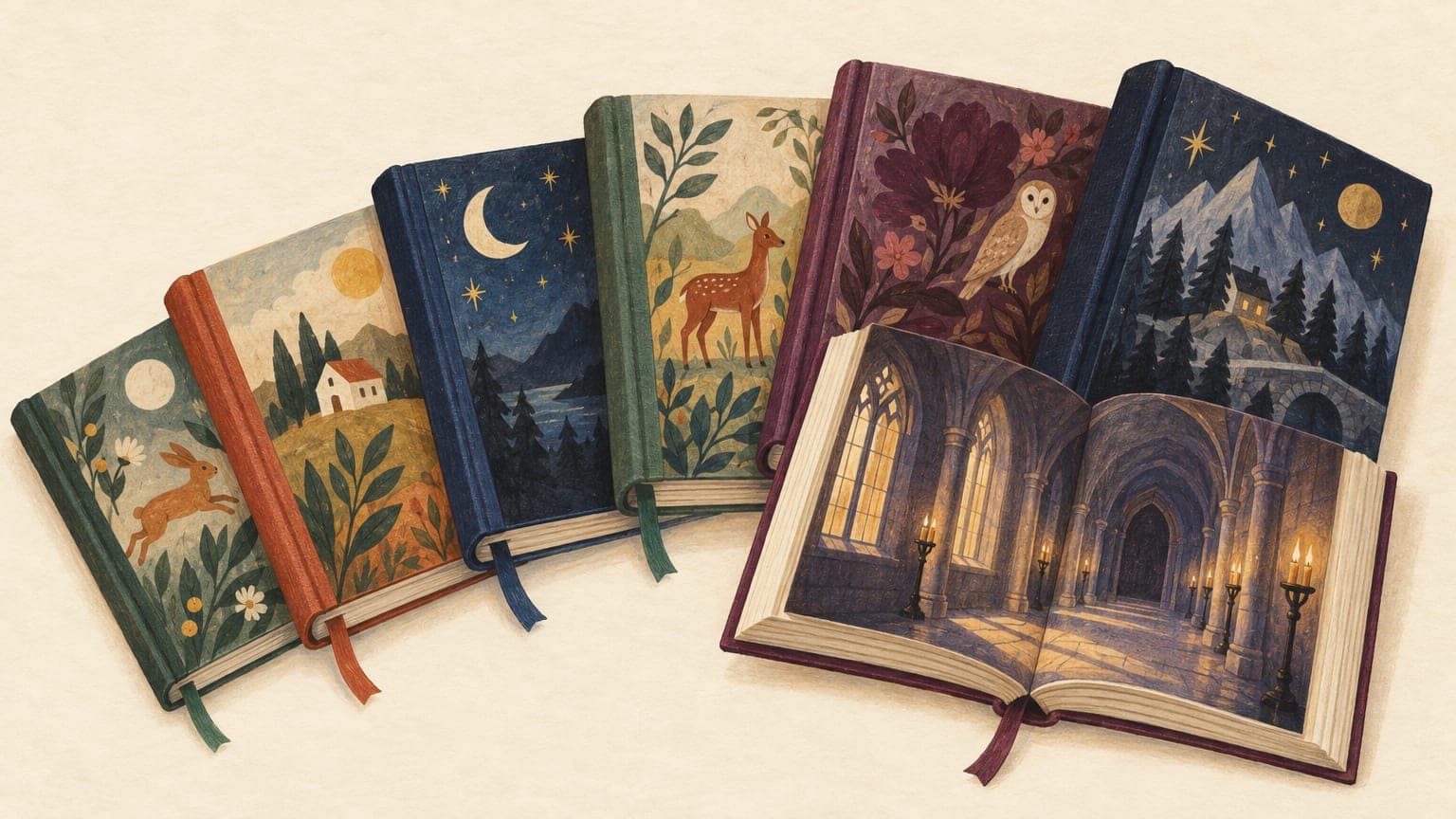
Before giving Harry Potter, most parents ask the same thing: what age is it for? The honest answer is that it depends on the book. The first ends happily and is a school story with magic; by the fifth, the books are far longer, and a character children have grown to love dies.
Here's what publishers say, how to pace the series book by book, what it's about, and the debates that come with it today.
In brief
- Seven books, from 1997. Bloomsbury published Harry Potter and the Philosopher's Stone in the UK on 26 June 1997.1
- No single UK age we could confirm. BookTrust lists the first book,2 but our research found no age from Bloomsbury or BookTrust that we could check directly.
- Publishers elsewhere give one age for the whole series: 9 to 12 at Gallimard Jeunesse in France, from 10 at Carlsen in Germany, for the thin first book and the thick fifth alike.34
- Two separate debates: the growing darkness of the later books, and the author's public statements on transgender people.
What the series is about
Harry grows up with an aunt and uncle who make him sleep in the cupboard under the stairs. On his eleventh birthday he learns that he's a wizard, that his parents were murdered, and that a place is waiting for him at a school he's never heard of. Each book then tells one year at Hogwarts.
Year by year, magic matters less than how people behave under pressure: who looks away, who goes along with the crowd, who lies to protect themselves. By the end, a war forces teenagers to make decisions the adults don't make for them.
That's why the series holds children for years: it grows up at roughly the pace of its readers. And it's also what makes the question of age tricky, because a child who starts at eight is rarely ready for the fifth book when they reach it.
What age, book by book
What publishers say. In France, Gallimard Jeunesse gives “9 to 12” on the pages of the first, fourth and fifth books.3 In Germany, Carlsen recommends all seven from 10.4 Neither publisher makes a difference between the books.
What they don't say is how much the books change. Between the third and the fourth, the tone shifts: until then, each school year ends with a mystery solved; in the fourth, a pupil dies and the enemy returns.
Our practical reading, without any publisher behind it: the first two books work read aloud from about eight, because you can stop and explain. Reading alone fits the publishers' nine or ten. From the fourth book, it's less about being able to read than about coping with what you read, and eleven or twelve is more realistic. Books five to seven are books for teenagers.
Give the books one at a time. With all seven on the shelf, a child reads straight on, because the next one is right there. One at a time, you keep control of the pace.
The books get darker
The series darkens, and at a precise point. From the fourth book on, there's torture, betrayal between friends and the deaths of characters readers have loved for years.
This is the real reason for the age question, and it's the least disputed point: nobody claims the fifth book is meant for an eight-year-old. The debate is about when a particular child is ready, and nobody can decide that from a distance.
How to notice: a child who sleeps badly after reading, who asks how it ends before reaching the middle, or who replays scenes to get rid of them. These signs simply suggest a break between two books would do good.
Frequently asked questions
What age is Harry Potter for?
Publishers give one age for the whole series: 9 to 12 at Gallimard Jeunesse in France, from 10 at Carlsen in Germany. In practice, that fits books one to three well. From the fourth book, it's more about coping with what you read than being able to read it: eleven or twelve is more realistic, and books five to seven are books for teenagers.
Can I read Harry Potter to my 8 year old?
Read aloud, it works earlier than reading alone, because you can stop, explain and skip. For books one and two, about eight seems possible to us. The difficulty comes later: a child who started at eight will want the fourth book at nine, and the fourth book is a different book.
Which Harry Potter book gets dark?
The break comes between the third and the fourth book. Until then, each year ends with a mystery solved. In the fourth, a pupil dies and the enemy returns, and from then on the books deal with torture, betrayal and the deaths of familiar characters.
How do families handle the debate around the author?
In very different ways, and that's their right. J. K. Rowling has spoken since 2020 about sex, gender and transgender people, notably in her essay of 10 June 2020, and Daniel Radcliffe responded publicly. Some families keep buying, others borrow from the library, talk about it with an older child or leave the series aside. We make no recommendation.
Sources
- 1.Wikipedia: Harry Potter and the Philosopher's Stone.What it confirms: First published in the UK by Bloomsbury on 26 June 1997.
- 2.BookTrust Bookfinder: Harry Potter and the Philosopher's Stone.What it confirms: The first book is listed in BookTrust's Bookfinder.
- 3.Gallimard Jeunesse: Harry Potter à l'école des sorciers, Folio Junior. (in French)What it confirms: The French publisher's age “de 9 à 12 ans” (9 to 12); the same on the pages of the fourth and fifth books.
- 4.Carlsen Verlag: Harry Potter FAQ. (in German)What it confirms: The German publisher's age recommendation from 10 for the whole series.
- 5.J. K. Rowling: J.K. Rowling Writes about Her Reasons for Speaking out on Sex and Gender Issues, 10 June 2020.What it confirms: The author's position, in her own words and with its date of publication.
- 6.The Trevor Project: Daniel Radcliffe Responds to J.K. Rowling's Tweets on Gender Identity, 8 June 2020.What it confirms: Daniel Radcliffe's response, his sentence “Transgender women are women” and what he says to readers of the books.
- 7.American Library Association: Top 100 Most Frequently Challenged Books, 2000-2009.What it confirms: The series in first place among the most challenged books of the decade in the United States.
A word about us
A story that belongs to your child
What the series has done since 1997 is grow up with its readers. A child starts with a boarding-school story and, seven books later, faces questions adults can't answer quickly either. That's why these books last.
At Sagalino, a story of its own is built around your child, with their name, in one of our 21 illustration styles. You read the whole story for free, and only pay afterwards.
Related articles
- Winnie-the-PoohBookTrust gives Winnie-the-Pooh an interest age of four and a reading age of seven. What that gap means, and how to read the stories at each age.
- Horrid HenryBookTrust gives Horrid Henry an interest age of four and a reading age of six. Why the books work so well for first readers, and what parents ask about Henry.
- Roald Dahl age rangeBookTrust puts The BFG and Matilda at 5 to 14, and James and the Giant Peach at 9 to 14. What those wide ranges mean, and when to start with Dahl.
All magazine articles
By age
The classics
At a glance: the illustration styles and how it works.