Choosing well · Picture books
Gender roles in picture books: what the figures say
6 min read2 sources
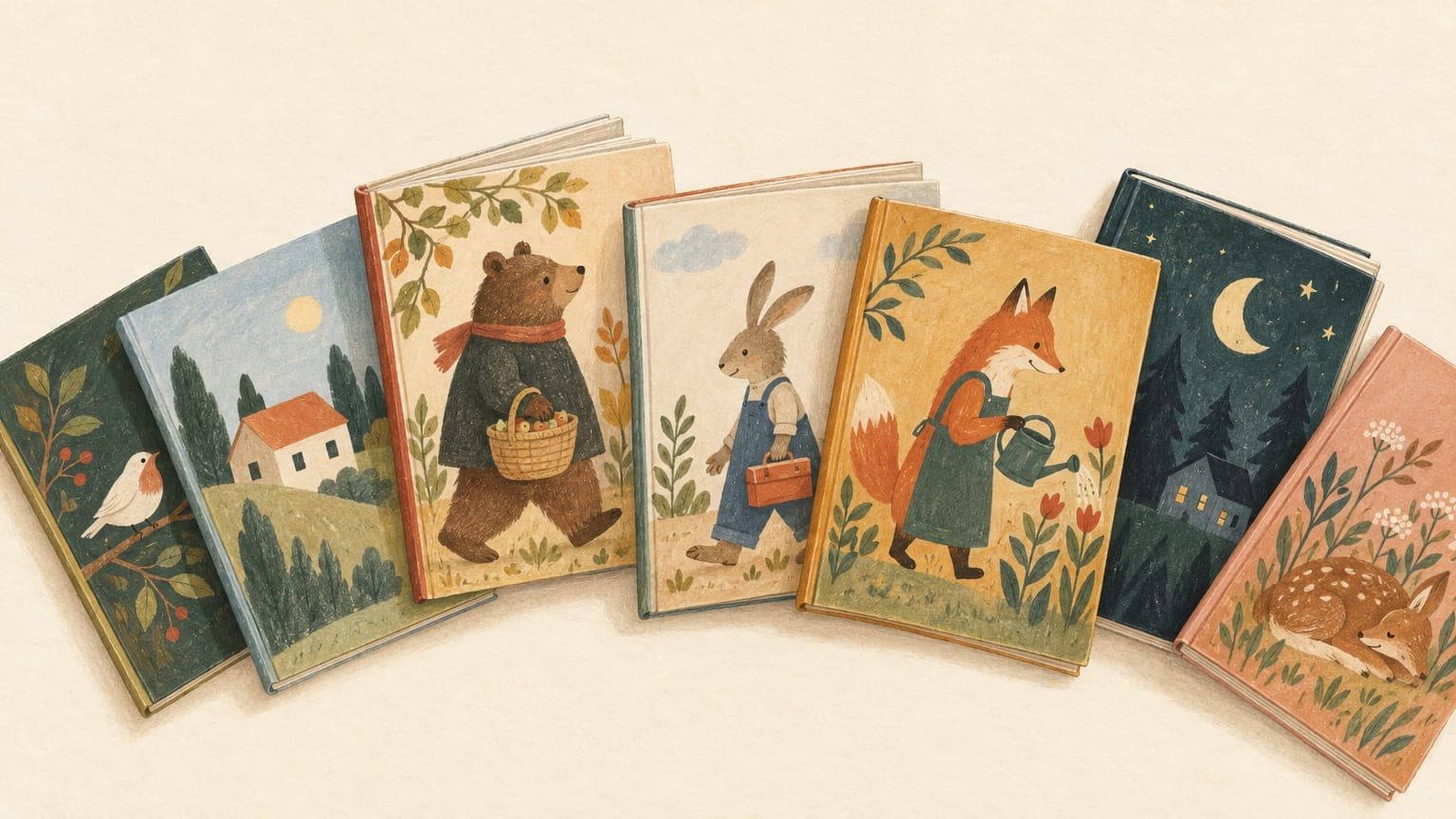
A lot is said about gender roles in children's books, and little is counted. There are counts, though, including a very large one: 3,280 books published over sixty years.
International research has long found more male characters. Recent figures show the gap closing among human characters and staying wide among animals. That, and who wrote the book, is where the clearest imbalances lie.
The main figures
- The gap is closing. An analysis of 3,280 children's books published between 1960 and 2020 finds, for 2010 to 2020, 1.22 male main characters for every female one, and 1.12 to 1 over the last five years studied.1
- Among animals, the gap stays wide. In the same analysis, fiction with human characters is at 0.95 to 1, practically balanced. Fiction with animal characters is at 3.09 to 1.1
- The author's gender counts for a lot. In books written by men, the ratio is 2.95 to 1 among human characters and 4.19 to 1 among non-human characters. In books written by women, it's 0.75 to 1 among human characters.1
- In 2006, the most-read picture books were still unbalanced. A 2006 study of 200 popular picture books found a clear under-representation of female characters, in titles and in main roles.2
Why animals change everything
Among human characters, recent books are almost balanced. Among animals, there are still three male main characters for every female one. And picture books for the youngest readers are full of bears, rabbits and foxes.
An animal doesn't need to be a boy to live its story, and yet that's the most common case. In English, “he” is often the default for an animal of unstated sex; it's the author who chooses, and the illustrator who dresses it.
And on children?
The counts describe books. What children take from them is another question, and the studies cited here don't measure it. So we claim no measured effect.
What every family can do is vary. Keep the books with dated roles and add others alongside: a heroine who climbs, a father who cooks, an animal whose gender doesn't matter. And an old-fashioned book makes a good starting point for a conversation, as long as someone talks about it while reading.
Four quick questions
1. Who is the hero when it's an animal? That's where the gap is widest: three male main characters for every female one.
2. What are the adults doing in the background? Stereotypes often hide in the secondary characters: who cooks, who fixes things, who picks the children up.
3. How is the heroine dressed, and what does that stop her doing? If she's brave but can't climb in her dress, the picture tells a different story from the text.
4. Who wrote it? The author's gender is one of the factors that weigh most on the balance between male and female characters. For how long a good picture book should be, see how much text per page.
Frequently asked questions
Are children's books still stereotyped?
In the number of characters, the gap has narrowed a lot: over the last five years studied, an analysis of 3,280 books finds 1.12 male main characters for every female one. Among animals, it's still 3 to 1. These figures are about the number of characters; for the roles they play, you have to look book by book.
Are there more male characters in children's books?
Yes, though less clearly than before. Between 2010 and 2020, the ratio is 1.22 to 1 in favour of male main characters. Fiction with human characters is practically balanced (0.95 to 1); fiction with animal characters isn't (3.09 to 1).
Has it improved over the decades?
Yes, slowly. A 2006 study of 200 popular picture books still found a clear under-representation of female characters. The analysis of sixty years of books published in 2021 finds 1.12 male main characters for every female one over its last five years.
Do these books influence how my child thinks?
The studies cited here count characters in books; they don't measure what children take from them. What you can do in any case: vary the books, and talk with your child about what the characters do.
Should I get rid of stereotyped books?
We'd suggest keeping them and adding others alongside. A book with slightly dated roles makes a good book for conversation, as long as someone talks about it with your child.
Sources
- 1.Casey, K., Novick, K. and Lourenco, S. F. (2021): Sixty years of gender representation in children's books, PLOS ONE 16(12), e0260566.What it confirms: 3,280 books from 1960 to 2020; 1.22 to 1 (2010 to 2020) and 1.12 to 1 (last five years); fiction with human characters 0.95 to 1, with animal characters 3.09 to 1; the author's gender among the significant factors, with character type, target audience and genre (2.95 to 1 for human and 4.19 to 1 for non-human characters of male authors; 0.75 to 1 for human characters of female authors).
- 2.Hamilton, M. C. et al. (2006): Gender Stereotyping and Under-representation of Female Characters in 200 Popular Children's Picture Books, Sex Roles 55, 757-765.What it confirms: 200 popular picture books; a clear under-representation of female characters in titles and main roles. The detailed figures were checked only through secondary sources, not the full text.
A word about us
Why these figures matter to us
At Sagalino, we make personalised children's books, and we had to ask ourselves exactly these questions when creating our characters: what qualities does a system suggest when you write “girl”? The figures above were more useful to us than opinions.
Related articles
- How much text per page for a children's bookHow long a picture book should be, and why the most quoted rule about children's attention span has no source.
- Books for 2 year oldsSeven books rated from two, from Goodnight Moon to The Tiger Who Came to Tea, for the age when a picture becomes a sign.
- Books for 3 year oldsSeven picture books for the age of why and how, from Room on the Broom to Where the Wild Things Are, each with the age BookTrust or Common Sense Media gives.
All magazine articles
By age
The classics
Choosing well
At a glance: the illustration styles and how it works.