Classics · The Very Hungry Caterpillar
The Very Hungry Caterpillar: what age is it for?
4 min read4 sources
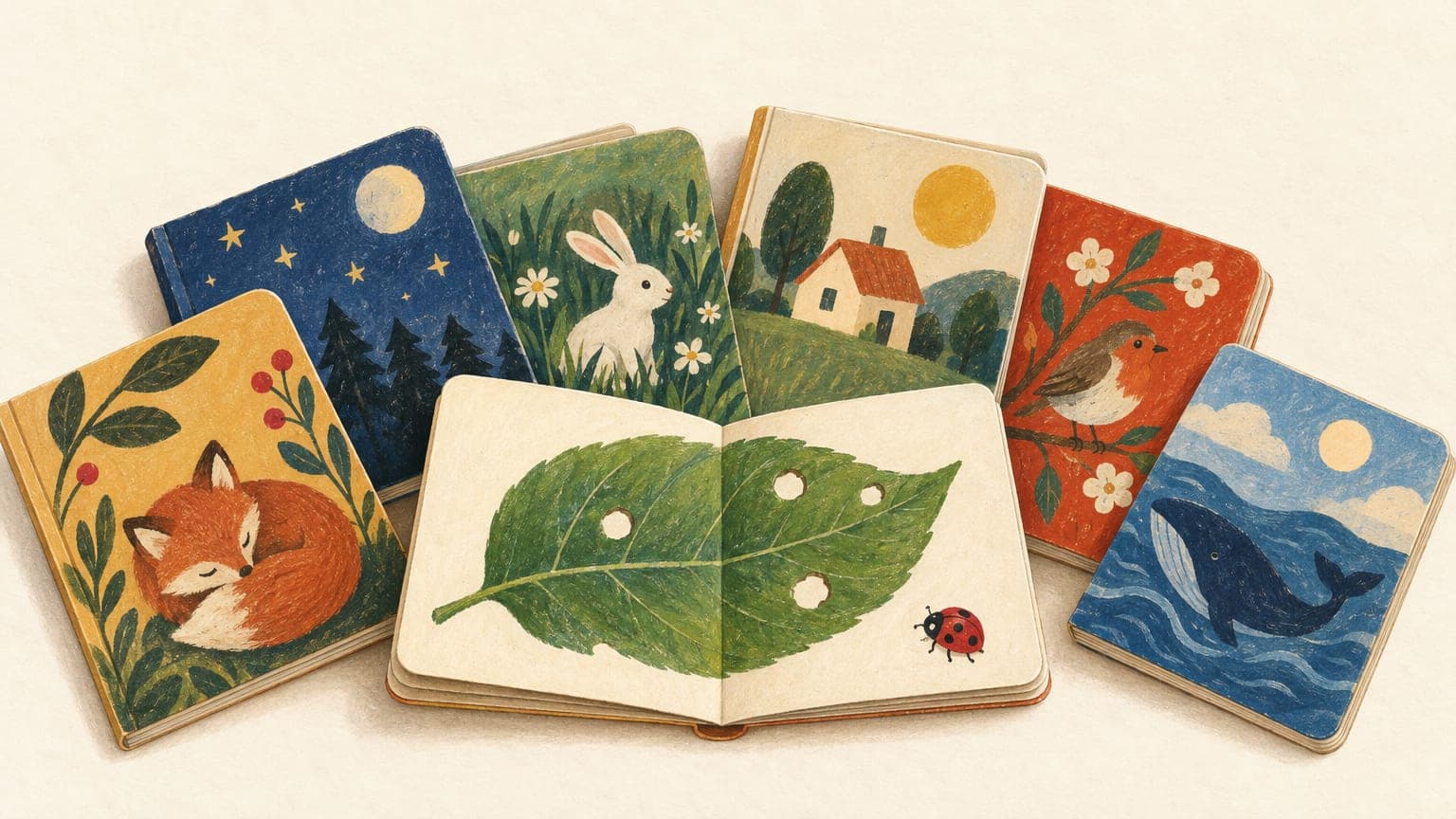
Eric Carle's caterpillar has been eating its way through the week since 1969. It's one of the first books many children own, and one they keep going back to.
Here's what age BookTrust and Common Sense Media give, and what the book offers at two, and still at five.
In brief
- Interest age 2 to 5, according to BookTrust, for the Puffin edition.1 Common Sense Media rates it “age 2+”.2
- First published in 1969 in the United States.
- More than 55 million copies sold worldwide, in 70 languages, according to Penguin.3
- Why two. Small children first confuse a picture with the thing it shows: a nine-month-old tries to put his mouth on a pictured bottle.4 A book with holes to poke a finger through gives them something to do with the pictures.
At two, and at five
At two, poke and name. A finger through the holes, the fruit named one by one, the days of the week without anyone teaching them. The pages get shorter or longer as the caterpillar eats, which toddlers love to feel.
At three or four, count and remember. How many plums? What did it eat on Saturday? Children who know the book by heart start telling it themselves.
At five, read it themselves. The text is short and repetitive. For a child starting to read, a book they know by heart is an easy first success.
Frequently asked questions
What age is The Very Hungry Caterpillar for?
BookTrust gives an interest age of two to five, and Common Sense Media rates it “age 2+”. It's a book children meet at two and still enjoy at five.
Is The Very Hungry Caterpillar good for a 1 year old?
The ages given start at two. Younger children may enjoy the pictures and the holes, especially in a board book edition, but the story itself is aimed at two and up.
When was The Very Hungry Caterpillar published?
Eric Carle's book was first published in the United States in 1969. It has sold more than 55 million copies worldwide, in 70 languages.
What does The Very Hungry Caterpillar teach?
Days of the week, counting and food, all through the story. And the transformation at the end, from caterpillar to butterfly, which children never tire of.
Sources
- 1.BookTrust Bookfinder: The Very Hungry Caterpillar.What it confirms: Interest age 2 to 5; Puffin.
- 2.Common Sense Media: The Very Hungry Caterpillar.What it confirms: The rating “age 2+”.
- 3.Penguin: The Very Hungry Caterpillar.What it confirms: More than 55 million copies sold worldwide, translated into 70 languages.
- 4.Judy S. DeLoache: Becoming Symbol-Minded, Association for Psychological Science.What it confirms: A nine-month-old tries to put his mouth on a pictured bottle, confusing the picture with the thing it shows; the page gives no age for understanding pictures as symbols.
A word about us
A book that grows with the child
The caterpillar becomes a butterfly, and children love a story in which someone small changes and grows.
At Sagalino, your child becomes the hero of a story with their name, in one of our 21 illustration styles. You read the whole story for free, and only pay afterwards.
Related articles
- Where the Wild Things AreCommon Sense Media rates Where the Wild Things Are “age 2+”. Why a book about anger and monsters works so young, and why it still works at six.
- Pippi LongstockingOxford University Press gives Pippi Longstocking “from 7” for the edition illustrated by Lauren Child. What the book asks of a child, eighty years on.
- InkheartChicken House gives Inkheart as 9+; BookTrust gives an interest age of 8+ and a reading age of 9+. Which one fits your child.
All magazine articles
By age
The classics
At a glance: the illustration styles and how it works.