Illustration style
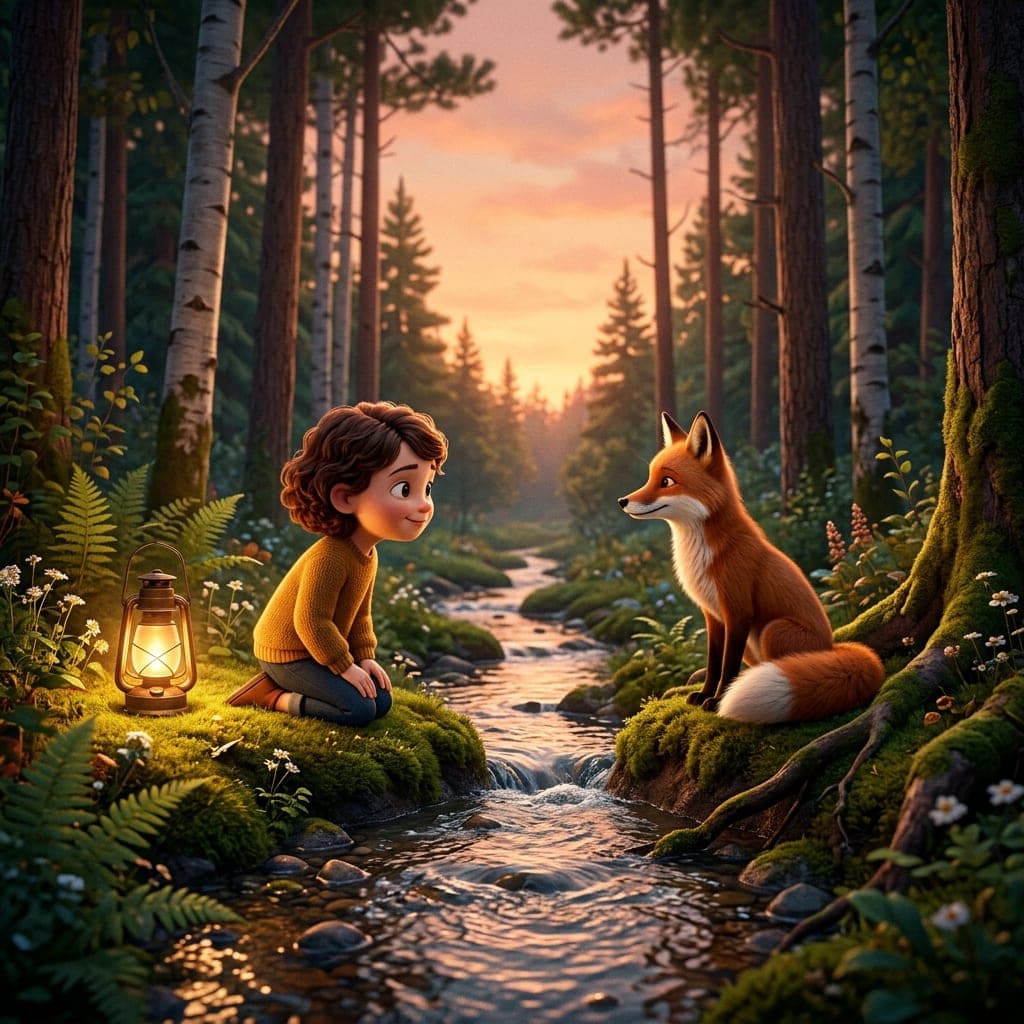
A children's book in the style of an animated film
The only style on this list that comes from the cinema. Many children know it better than any painting technique.
Read the whole story for freeThe same style throughout the bookeBook £4.50
Thirty years of cinema in one picture style
On 22 November 1995, Pixar's Toy Story opened in the United States, the first feature film made entirely with computer-generated images. What was a technical feat then is now the imagery children grow up with: characters with volume, soft light, smooth surfaces, big eyes.
The most important turning point came in 2018 with Sony Pictures Animation's Spider-Man: Into the Spider-Verse. The team deliberately gave up photorealism and developed a process that makes it look like a printed comic: visible halftone dots, hatching, hand-drawn lines over the 3D models, and movement on every second frame. Since then, 3D no longer has to mean smooth.
The series Arcane by the French studio Fortiche, on Netflix since 2021, continues along this path by combining 3D models with hand-painted textures and painted backgrounds. The sources on this come mainly from industry publications, though, so this point is less firmly established than the two before it.
What that means for a children's book: this style comes with expectations. Children know it from films and read it faster than any painting technique. That's a strength at first glance, and a drawback when you're looking for calm.
The names behind it
Pixar Animation Studios
Toy Story, directed by John Lasseter, 1995
The first feature film made entirely with computer-generated images. It set the look of animated characters for a whole generation.
Sony Pictures Animation
Spider-Man: Into the Spider-Verse, 2018
The deliberate break with photorealism, with halftone dots, hatching and lines drawn over the 3D models. Since then, 3D no longer has to be smooth.
Studio Fortiche
Arcane, Netflix, 2021
3D characters with hand-painted textures and painted backgrounds. The available sources come mainly from industry publications.
How do you recognise the 3D style?
- The characters have volume and cast shadows; they don't sit flat on the page.
- Soft, directed light with visible highlights.
- Smooth surfaces where you can tell the material: fabric doesn't look like skin.
- Big eyes and simplified faces, inherited from animated film.
- Depth: the background is softer than the main character.
Which stories the 3D style suits
This style suits adventure and action: space, dinosaurs, vehicles, everything with pace. It's also the choice for children who love films and don't take to painted picture books.
It doesn't suit calm stories. A goodbye, a loss or bedtime call for a quieter style; watercolour or Nordic fairy tale are then much better.
In terms of age, it works from about three and into primary school.
Good to know
Will my child be recognisable in this style?
Very much so. Of all the styles, it's the one that renders faces most directly, because it works with volume and light. You describe the hair colour, hairstyle, eyes, glasses and favourite outfit.
Is this based on one particular film?
No. We use the general look of today's animated films, without borrowing characters, brands or designs from any particular film.
From what age does this style suit?
From about three. It particularly suits children who know animated films and take less to painted picture books.
Does the style stay the same throughout the book?
Yes. All 14 double pages are illustrated in the style you choose, and so are the cover and the character's portrait.
- 1.EDN: 1st computer-animated feature film released, November 22, 1995.What it confirms: Toy Story was released on 22 November 1995 and is regarded as the first feature film made entirely with computer-generated images.
- 2.Animation World Network: Rewriting the Visual Rule Book on Spider-Man: Into the Spider-Verse.What it confirms: Deliberate break with photorealism, with halftone dots, hatching, drawn lines and movement on every second frame.
- 3.RedShark News: Why Netflix's Arcane looks so good.What it confirms: Fortiche combines 3D character models with hand-painted textures and 2D backgrounds. An industry publication, not an independent editorial source.
The other styles
- Andean textile art
- Art Nouveau
- Chinese ink
- Coloured pencil
- Cordel woodcut
- Fine pen
- Graphic and simple
- Graphic novel
- Ink and watercolour
- Ligne claire
- Minhwa world
- Nordic fairy tale
- Paper collage
- Retro gouache
- Risograph
- Silhouettes
- Tingatinga world
- Ukiyo-e inspired
- Watercolour
- Wax crayon
At a glance: all illustration styles, how it works, frequently asked questions, the book without a photo, reading the story before you buy and the AI children's book.