Illustration style
A paper collage children's book
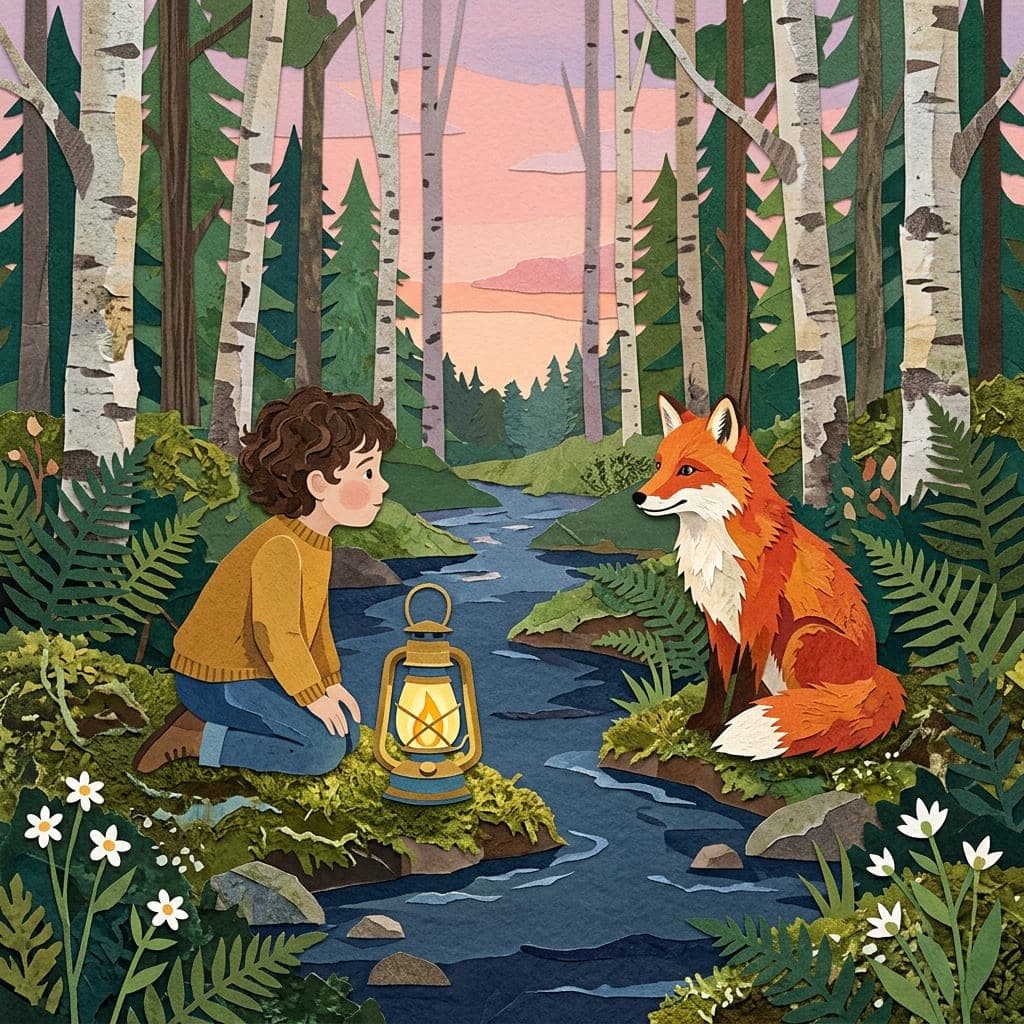
A picture built rather than painted: areas of painted paper are cut out and layered. The most famous caterpillar in the world was made this way.
Read the whole story for freeThe same style throughout the bookeBook £4.50
From Cubism to the nursery
Collage took hold as a means of expression around 1912, with Cubism. It only entered the picture book from the middle of the twentieth century, first in the United States. Leo Lionni led the way in 1959 with Little Blue and Little Yellow, a book made entirely of torn scraps of paper. Its origin is well documented: Lionni made up the story on a train to keep his grandchildren busy, with nothing but coloured paper to hand.
Three years later came The Snowy Day by Ezra Jack Keats, which received the Caldecott Medal in 1963. It was the first picture book so honoured whose hero was an African American child, and Keats worked with scraps of fabric, oilcloth and newspaper.
The technique owes its fame to Eric Carle, whose method is better documented than that of most illustrators. He painted large sheets of white tissue paper with acrylic, with brushes but also with pieces of carpet and other tools, to create texture. He stored the dry papers by colour in flat drawers. From this stock he cut his shapes and glued them onto board.
The key point: with Carle, the colour came before the picture. He had a stock of painted papers before he knew which story he would tell with them.
The names behind it
Eric Carle
The Very Hungry Caterpillar, The World Publishing Company, 1969
He painted tissue papers with acrylic, using brushes and pieces of carpet, sorted them by colour and cut his characters from them. The technique is now inseparable from the book.
Leo Lionni
Little Blue and Little Yellow, Ivan Obolensky, 1959
His first book, made of torn scraps of paper. He showed that two spots of colour make characters, as long as the story holds.
Ezra Jack Keats
The Snowy Day, Viking Press, 1962
Caldecott Medal 1963, the first picture book so honoured with an African American hero. Keats worked with fabric, oilcloth and newspaper.
How do you recognise a collage?
- Visible cut edges: shapes stop sharply, without the blending of paint.
- Different paper textures within one area, because the paper was painted beforehand.
- Overlaps where you can see which layer is on top.
- No evenly painted area: every area has its own texture.
- Often bold, dense colours, because acrylic covers the paper.
Which stories collage suits
Collage excels with big, clear shapes: animals, plants, the seasons, counting and growing up. It suits the youngest especially well, because the shapes stand apart clearly and are easy to name.
For fine expressions it's the hardest of the techniques. A face made of cut shapes can be friendly or serious, with little in between. If a story lives from subtle emotions, watercolour or fine pen suit better.
In terms of age, collage is the best choice for the very youngest, from about two, and stays with the child until the end of the early years.
Good to know
Will my child look like themselves in a collage?
By shape and colour: the hair colour, the hairstyle, the clothes, distinctive features such as glasses. This technique can't render fine facial features; it's in its nature. If a likeness of the face matters to you, watercolour or ink and watercolour suit better.
Is this the technique of The Very Hungry Caterpillar?
Yes, it's the same visual language. Eric Carle painted tissue papers with acrylic, sorted them by colour and cut his characters from them. We use this look without copying any particular book.
From what age does the collage style suit?
From about two. The big, clear shapes are easy for little ones to recognise and name, and at that age that's the main thing they do with a picture book.
Does the style stay the same throughout the book?
Yes. All 14 double pages are illustrated in the style you choose, and so are the cover and the character's portrait.
- 1.Eric Carle Museum of Picture Book Art: Artistic Process.What it confirms: Carle painted tissue paper with acrylic using brushes and pieces of carpet, sorted the dry papers by colour and cut the shapes from them.
- 2.National Endowment for the Arts: The Making of The Snowy Day.What it confirms: Keats worked with collage materials such as fabric, oilcloth and newspaper; Caldecott Medal 1963.
- 3.Bauman Rare Books: Leo Lionni, Little Blue and Little Yellow.What it confirms: First edition in 1959 from Ivan Obolensky, made of torn scraps of paper.
The other styles
- 3D animation
- Andean textile art
- Art Nouveau
- Chinese ink
- Coloured pencil
- Cordel woodcut
- Fine pen
- Graphic and simple
- Graphic novel
- Ink and watercolour
- Ligne claire
- Minhwa world
- Nordic fairy tale
- Retro gouache
- Risograph
- Silhouettes
- Tingatinga world
- Ukiyo-e inspired
- Watercolour
- Wax crayon
At a glance: all illustration styles, how it works, frequently asked questions, the book without a photo, reading the story before you buy and the AI children's book.